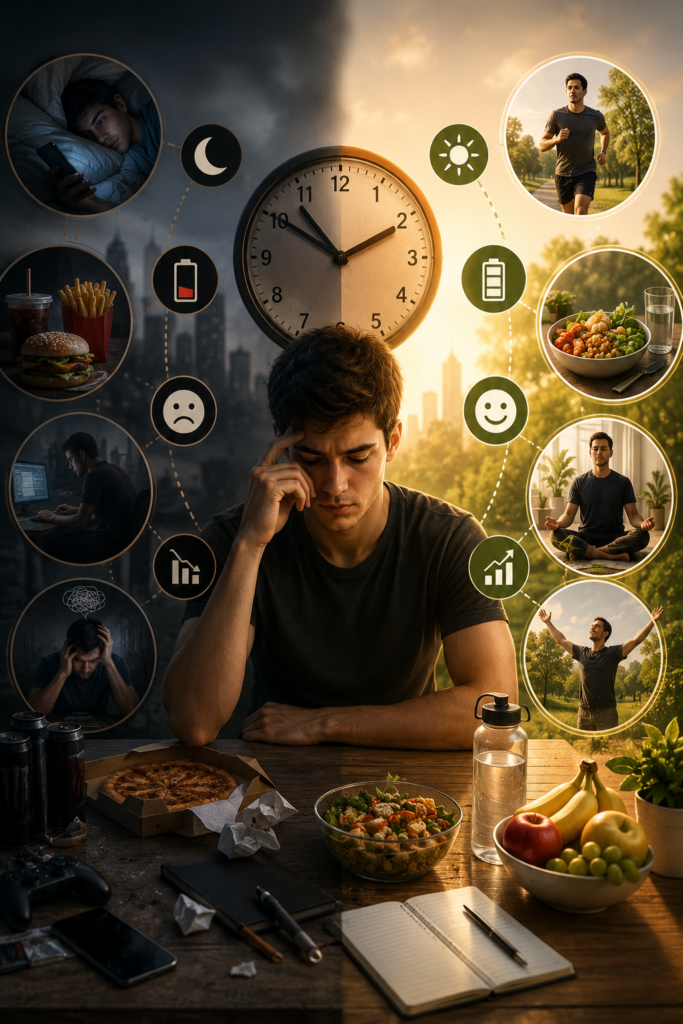
Your 20s often feel like a “strong body, no limits” phase. You can skip sleep, eat anything, sit for hours, and still get through the day. But the real cost of these habits doesn’t show up immediately—it builds silently.
The first hidden cost is constant low energy. It doesn’t feel like illness, just a “tired all the time” feeling. Poor sleep, irregular meals, and screen overload slowly become your normal baseline.
Sleep is usually the biggest casualty. Late nights and broken sleep cycles don’t just cause next-day fatigue—they affect memory, mood, and stress levels in ways you don’t notice right away.
Food choices also leave a silent impact. Fast food and sugar-heavy diets don’t cause instant damage, but over time they affect digestion, focus, and energy stability throughout the day.
Sitting too much and moving too little weakens your body slowly. You may not feel it now, but flexibility, posture, and stamina quietly decline when movement is missing.
Mental health is closely tied to physical habits. Poor lifestyle patterns often increase stress, anxiety, and irritability, even when life itself hasn’t changed much.
Another hidden problem is getting used to discomfort. Headaches, bloating, and fatigue start feeling “normal,” when in reality they are warning signs your body is sending.
Productivity also drops without you realizing it. You stay busy, but your focus, creativity, and decision-making become weaker over time.
The biggest myth is “I’m young, I can handle it.” Yes, the body adjusts—but it also stores the damage.
The truth is simple: your 20s build your future health. Small habits today decide your energy, mood, and strength tomorrow.
You don’t need perfection—just awareness. Fixing sleep, moving daily, and eating better even 20% of the time can completely change how you feel.
Because the real hidden cost of being unhealthy in your 20s isn’t just illness later—it’s losing the best version of your energy right now.
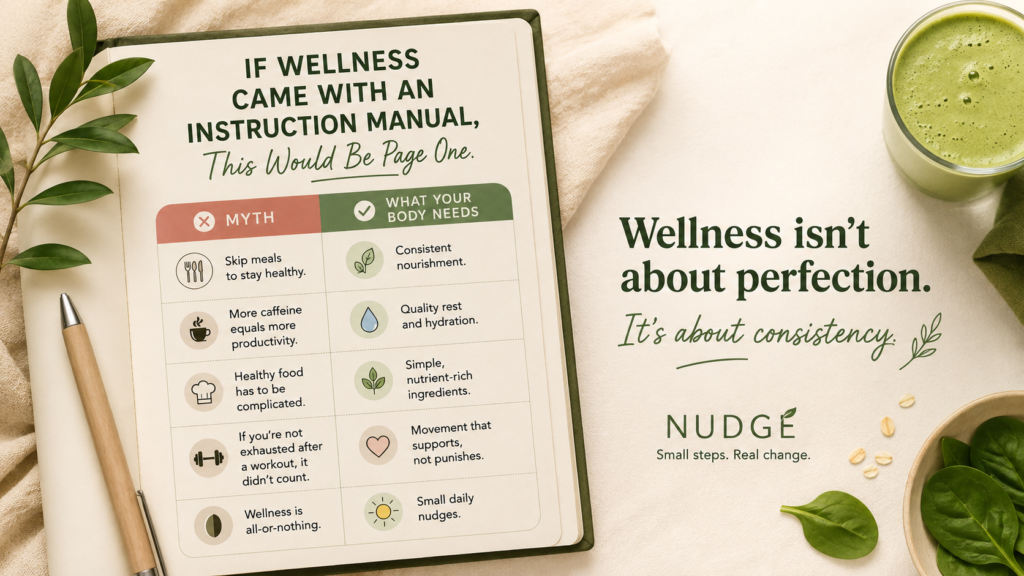
Imagine if your body came with an instruction manual. Not a complicated 500-page book, but a simple guide explaining what it actually needs to function at its best. Surprisingly, most of us would discover that many wellness “rules” we’ve been following aren’t really helping.
Myth #1: Skip meals to stay healthy. What your body needs: Consistent nourishment. Your body isn’t designed to thrive on long periods of deprivation. It needs steady fuel to maintain energy, focus, and mood throughout the day.
Myth #2: More caffeine equals more productivity. What your body needs: Quality rest and hydration. Coffee can provide a temporary boost, but it can’t replace the benefits of proper sleep and balanced nutrition.
Myth #3: Healthy food has to be complicated. What your body needs: Simple, nutrient-rich ingredients. Wellness isn’t about perfection—it’s about giving your body what it needs, consistently.
Myth #4: If you’re not exhausted after a workout, it didn’t count. What your body needs: Movement that supports, not punishes. A walk, a stretch session, or a quick workout can be just as valuable as an intense gym session.
Myth #5: Wellness is all-or-nothing. What your body needs: Small daily nudges. Tiny habits repeated consistently create bigger results than short bursts of extreme motivation.
At NUDGE, we believe wellness shouldn’t feel overwhelming. It should fit naturally into your everyday routine. That’s why our smoothies are designed to be one simple step toward better nutrition—no complicated plans, no unrealistic rules.
If wellness came with an instruction manual, page one would be simple: listen to your body, fuel it well, move it often, and make choices that are sustainable. Everything else is just a bonus.
Because sometimes, the smallest nudge can create the biggest change.
The Beginner’s Guide to Staying Healthy During a Busy Workday
For many working professionals, the modern workday looks something like this:
Wake up. Commute. Sit at a desk for 8–10 hours. Scroll through emails. Attend meetings. Head home exhausted.
By the end of the day, there’s little energy left for exercise, meal prep, or self-care.
The good news?
You don’t need a complete lifestyle overhaul to improve your health. Small, consistent changes can help you stay active, energized, and productive—even during the busiest work weeks.
At NUDGE, we believe wellness should fit into your life, not take over it.
Why Long Office Hours Affect Your Health
Sitting for extended periods can contribute to:
Low energy levels
Poor posture
Neck and back pain
Increased stress
Weight gain
Reduced physical activity
Poor sleep quality
The challenge isn’t that people don’t care about their health.
The challenge is that most wellness advice isn’t designed for people with packed schedules.
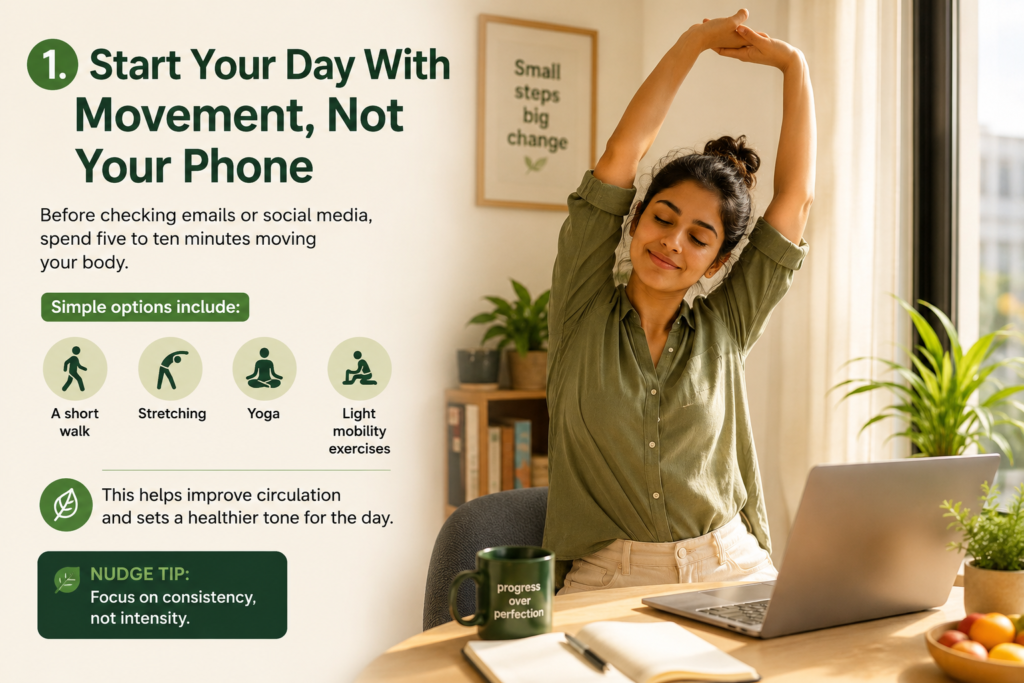
1. Start Your Day With Movement, Not Your Phone
Before checking emails or social media, spend five to ten minutes moving your body.
Simple options include:
A short walk
Stretching
Yoga
Light mobility exercises
This helps improve circulation and sets a healthier tone for the day.
NUDGE Tip: Focus on consistency, not intensity.
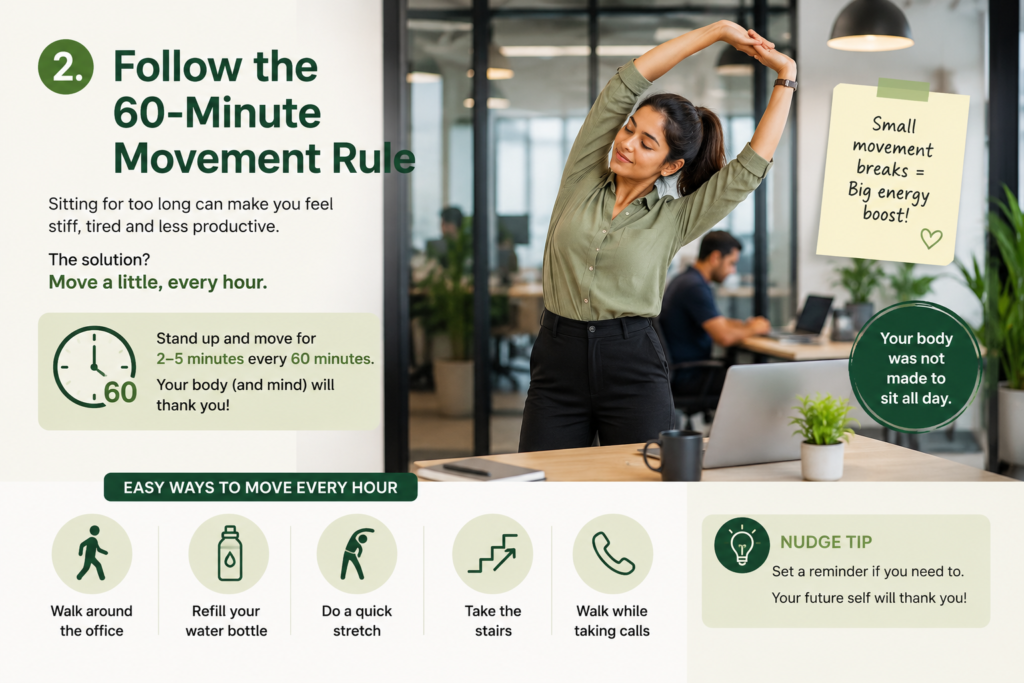
2. Follow the 60-Minute Movement Rule
If your work requires long periods of sitting, try standing up and moving every hour.
You don’t need a workout.
Simply:
Walk around the office
Refill your water bottle
Take a quick stretch break
Walk while taking phone calls
These micro-movements can reduce stiffness and improve focus.
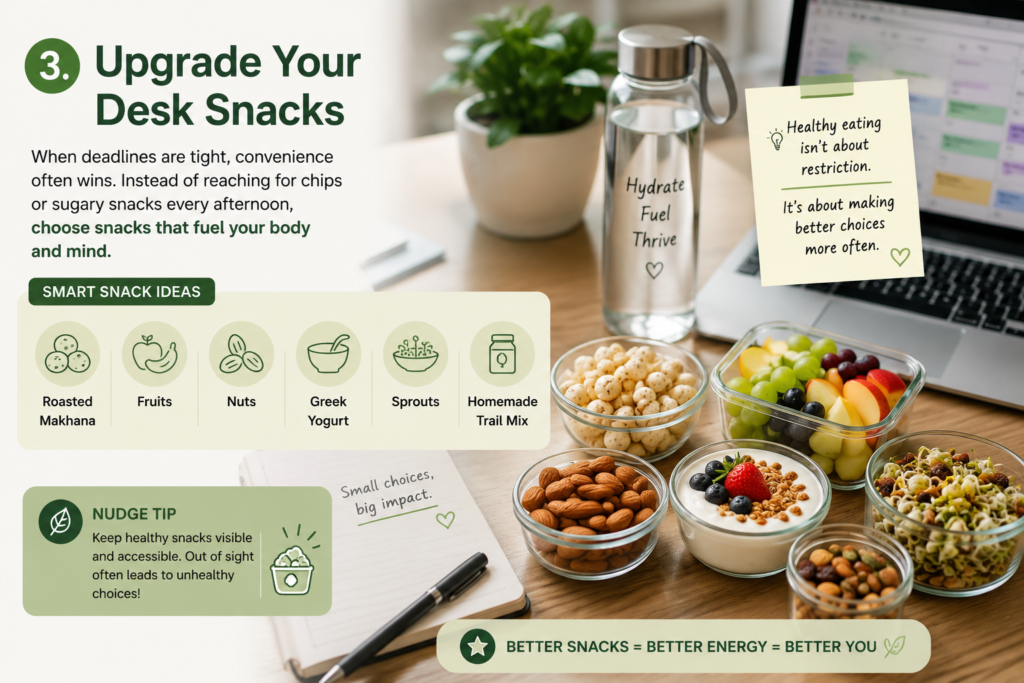
3. Upgrade Your Desk Snacks
When deadlines are tight, convenience often wins.
Instead of reaching for chips or sugary snacks every afternoon, keep healthier alternatives nearby.
Smart snack ideas:
Roasted makhana
Fruits
Nuts
Greek yogurt
Sprouts
Healthy Smoothies
Healthy eating isn’t about restriction.
It’s about making better choices more often.
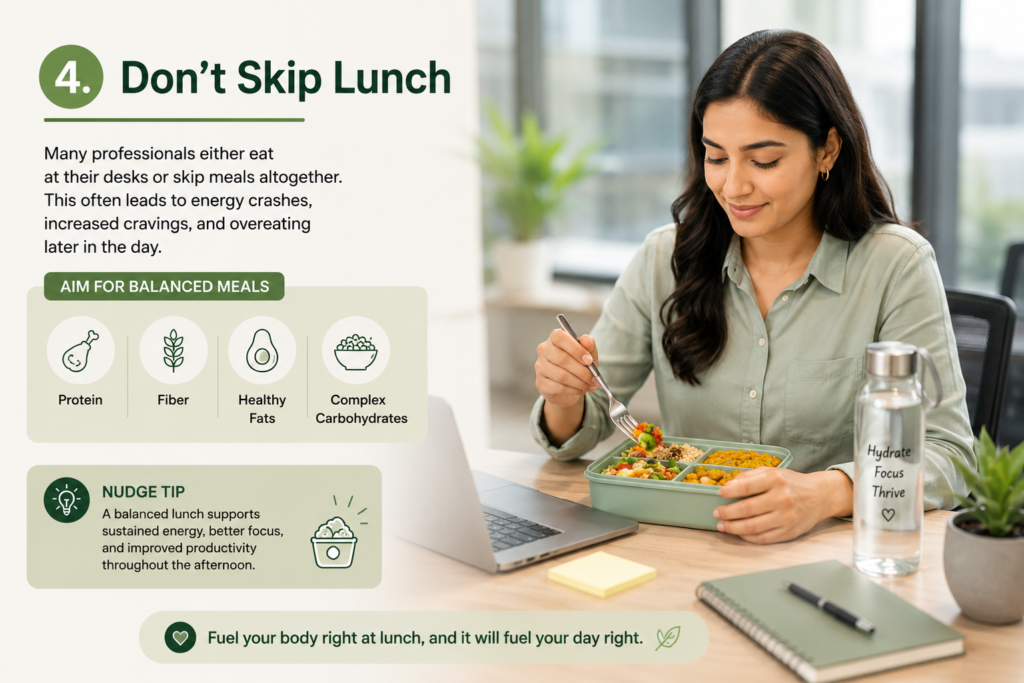
4. Don’t Skip Lunch
Many professionals either eat at their desks or skip meals altogether.
This often leads to:
Energy crashes
Increased cravings
Overeating later in the day
Aim for balanced meals containing:
Protein
Fiber
Healthy fats
Complex carbohydrates
A balanced lunch supports sustained energy throughout the afternoon.
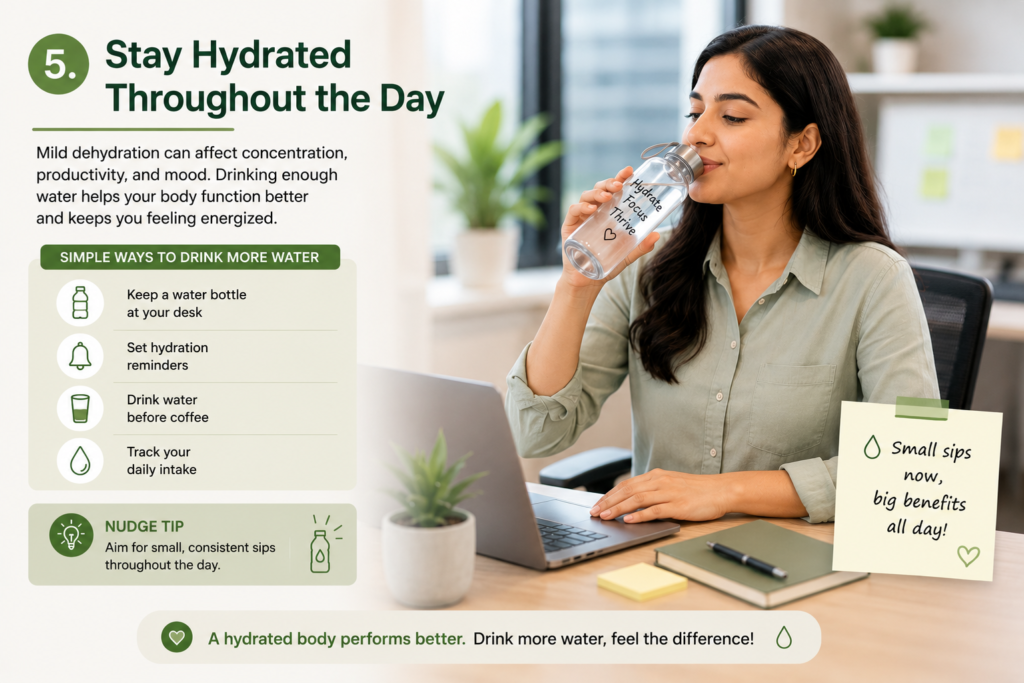
5. Stay Hydrated Throughout the Day
Mild dehydration can affect concentration, productivity, and mood.
Simple ways to drink more water:
Keep a water bottle at your desk
Set hydration reminders
Drink water before coffee
Track daily intake
A hydrated body performs better.
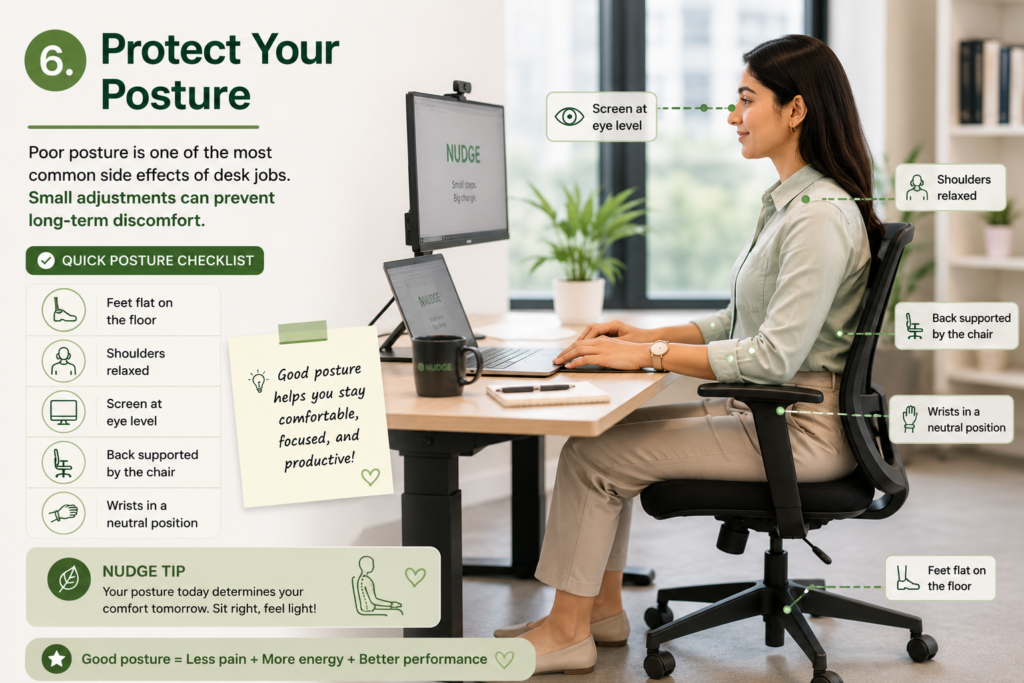
6. Protect Your Posture
Poor posture is one of the most common side effects of desk jobs.
Quick posture checklist:
✅ Feet flat on the floor
✅ Shoulders relaxed
✅ Screen at eye level
✅ Back supported by the chair
✅ Wrists in a neutral position
Small adjustments can prevent long-term discomfort.
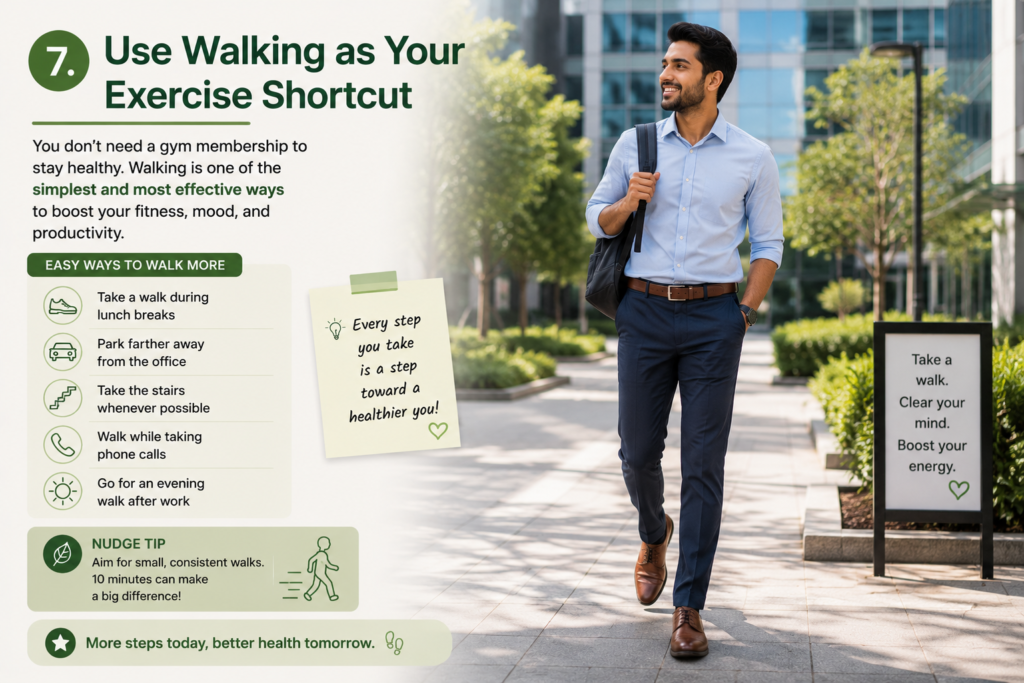
7. Use Walking as Your Exercise Shortcut
Many people assume they need a gym membership to stay healthy.
In reality, walking remains one of the simplest and most effective forms of exercise.
Try:
Walking during lunch breaks
Parking farther away
Taking stairs when possible
Evening walks after work
Every step counts.
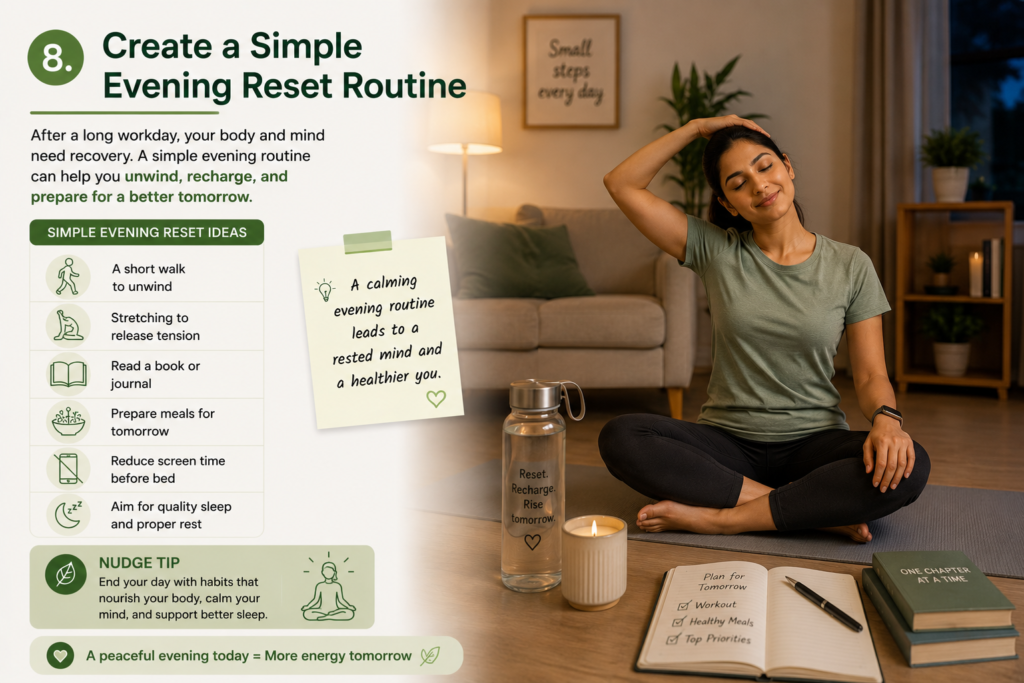
8. Create a Simple Evening Reset Routine
After a long workday, your body and mind need recovery.
A simple evening routine may include:
A short walk
Stretching
Reading
Preparing tomorrow’s meals
Reducing screen time before bed
These habits support better sleep and improved recovery.
9. Make Your Office Evenings Easier With a Smart Smoothie Habit
One of the biggest reasons people skip healthy eating after work is simple: they’re tired.
After a long day of meetings, deadlines, and commuting, cooking a balanced meal can feel exhausting. That’s where a simple smoothie habit can help.
At NUDGE, we believe healthy eating should be practical, quick, and sustainable — especially for busy professionals.A well-made smoothie can become your 5-minute wellness reset after work.
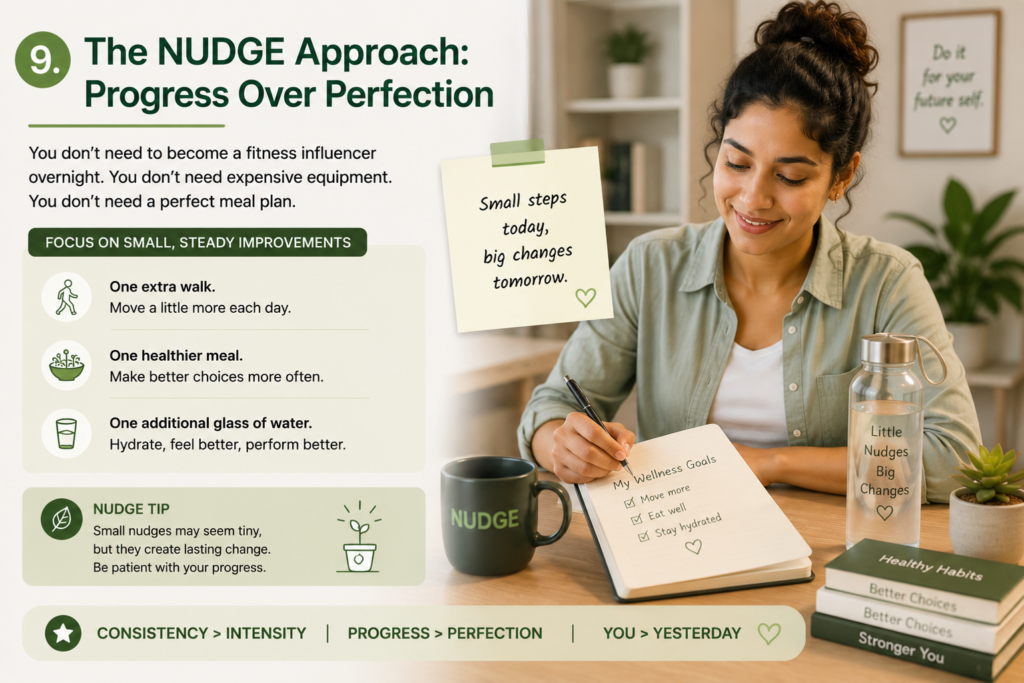
The NUDGE Approach: Progress Over Perfection
You don’t need to become a fitness influencer overnight.
You don’t need expensive equipment.
You don’t need a perfect meal plan.
The goal is simple:
Make small improvements that fit your lifestyle.
One extra walk.
One healthier meal which Nudge Offers.
One additional glass of water.
Those small nudges add up over time.
Final Thoughts
Long office hours don’t have to come at the expense of your health.
By focusing on small, sustainable habits, you can improve your energy, productivity, and overall well-being without adding stress to your schedule.
Remember:
Wellness isn’t about perfection.
It’s about making better choices, one step at a time.